Hi, I’m Mykola. Our team at GoShineUp cleans dozens of bathrooms every week across Waterford, Pontiac, West Bloomfield, and Oakland County. And out of every surface in every home — the toilet is where you can tell within 10 seconds whether someone knows what they’re doing. Most people think cleaning a toilet is easy: pour some blue liquid in the bowl, swish a brush around, wipe the seat, done. That’s not a deep clean — that’s a maintenance wipe.
A proper deep clean covers eight distinct zones of a toilet, and skipping any of them is why bathrooms still smell “off” even right after you’ve cleaned. This guide walks you through exactly how our team does it — the same method we use in every single home.
Deep Clean vs. Regular Toilet Cleaning: What’s the Difference?
Before we start — let’s be clear about what we’re actually doing.
Regular cleaning: a quick weekly wipe. Bowl brush, wipe the seat, done in 5 minutes. Good for maintenance between deep cleans.
Deep cleaning: every zone of the toilet — bowl, under the rim, tank, base, behind, floor around it, plus the flush handle and hinges. Takes 20–30 minutes done right.
If you’ve never done a real deep clean on your toilet, or it’s been more than a month — this is the guide for you. If your issue is specifically with hard water stains or rings, we have a separate detailed guide on how to clean a stained toilet that covers that specifically.
What You’ll Need
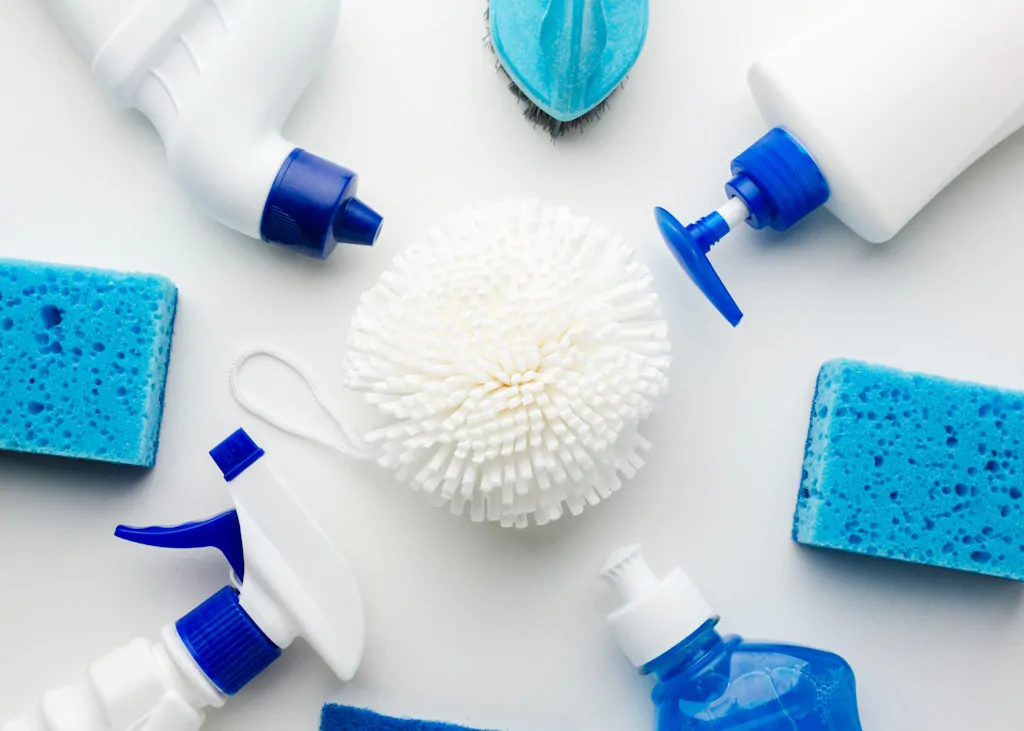
Everything on this list is cheap and easy to find. Don’t skip the gloves and don’t reuse cloths from other rooms.
Cleaners:
- Toilet bowl cleaner (get one with hydrochloric acid for hard stains — CLR, Zep, or Lysol Power Toilet Bowl work great)
- Disinfectant spray (Lysol, Method, or a diluted bleach solution)
- White vinegar
- Baking soda
- Dish soap (a few drops)
Tools:
- Rubber gloves (dedicated pair for the bathroom only)
- Toilet brush with stiff bristles
- Old toothbrush (for hinges, base seams, and under the rim)
- 3–4 microfiber cloths (dedicated toilet cloths, do not mix with kitchen)
- Pumice stone (only if you have severe mineral rings)
- Paper towels
- Small bucket or spray bottle
Two rules from our team:
Color-code your cloths. Whatever color you use for the toilet stays with the toilet. Cross-contamination between the toilet and other surfaces is the #1 reason bathrooms don’t feel truly clean.
Always wear gloves. Not just for hygiene — the acid in toilet bowl cleaner will irritate your skin.
The 8 Zones of a Toilet Deep Clean
Every proper deep clean covers these eight zones, in this order. Skipping any one of them leaves the job unfinished — and Zone 7 (behind the toilet) is where 90% of home cleaners lose points.
Zone 1: Inside the bowl Zone 2: Under the rim Zone 3: Toilet tank (inside) Zone 4: Tank exterior and flush handle Zone 5: Seat, lid, and hinges Zone 6: Bowl exterior and base Zone 7: Behind and around the toilet Zone 8: Floor at the base
Let’s go through each one.
Zone 1: Inside the Bowl
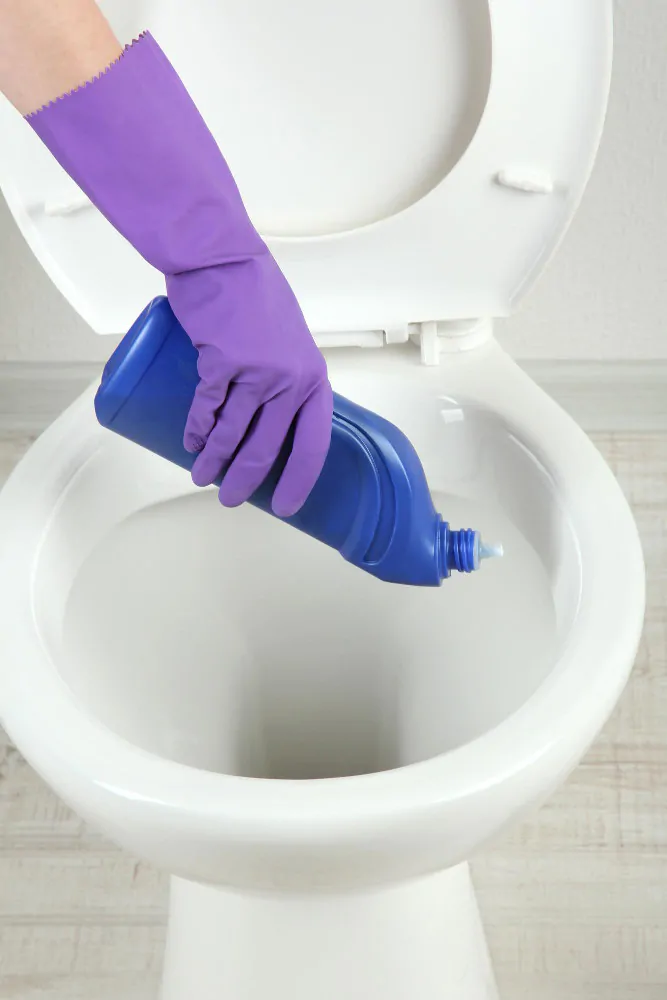
This comes first — but only to apply cleaner. You’ll come back to scrub later.
Here’s the step most people rush: applying cleaner and immediately scrubbing. Toilet bowl cleaners need 10–15 minutes of contact time to actually break down mineral deposits, bacteria, and hard water stains. Scrubbing right away wastes 80% of the product.
Step 1: Flush the toilet to wet the bowl surface.
Step 2: Squirt toilet bowl cleaner in a full circle under the rim. This is critical — the rim is where cleaner drips down and coats the entire bowl. Don’t just squirt in the water.
Step 3: Add another squeeze directly into the standing water. This is what disinfects below the waterline.
Step 4: Walk away. Let it sit while you clean everything else. 15 minutes minimum. This is not optional.
Zone 2: Under the Rim
While the cleaner works, get your tools ready — but before scrubbing, understand what’s actually under the rim.
Under most toilet rims there are small water jets. Mineral deposits and biofilm build up around these jets and cause two problems: reduced flush power and lingering odor even when the bowl looks clean.
When you come back to scrub (after Zone 5):
Use your toilet brush and press firmly upward against the underside of the rim, scrubbing in a full circle. Get the brush bristles into every jet hole. If your brush is too soft to reach, an old dish scrub brush or a bent bottle brush works better.
For heavy mineral buildup: soak paper towels in white vinegar, tuck them up under the rim, and let them sit 30 minutes before scrubbing. The vinegar dissolves the deposits.
Zone 3: Toilet Tank (Inside)
Almost nobody cleans inside the tank. That’s a mistake — if the tank has mineral buildup, black mold, or discoloration, that dirty water fills the bowl every single flush. You can’t get a clean bowl from a dirty tank.
How often: Every 3–4 months for most homes. Every 1–2 months if you have hard water (like most of Waterford and Oakland County).
How to clean it:
- Remove the tank lid carefully — set it on a towel to protect it
- Look inside. If you see rust, black spots, or mineral scale — you need to clean it
- Pour 1 cup of white vinegar into the tank
- Let it sit for 1 hour (do not flush during this time)
- Use a toilet brush or long-handled scrub brush to scrub the tank walls and around the flush mechanism
- Flush 2–3 times to rinse
Warning: Do not use bleach in the tank. Bleach corrodes the rubber gaskets and metal parts of the flush mechanism. Vinegar is safe. If you have severe buildup, use a product specifically labeled safe for toilet tanks.
Zone 4: Tank Exterior and Flush Handle
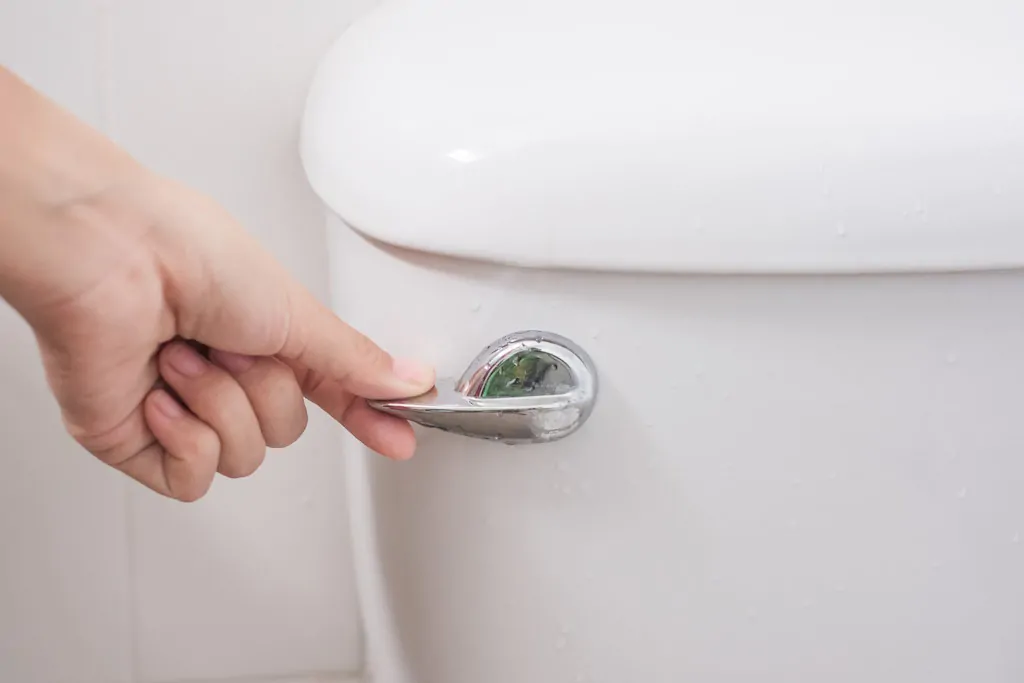
The flush handle is the single highest-touch, least-cleaned surface in most bathrooms. Studies have shown it harbors more bacteria per square inch than the seat — because everyone touches it right after using the toilet, before washing their hands.
Method:
- Spray disinfectant on a microfiber cloth (not directly on the surface — spray drift can damage nearby items)
- Wipe the flush handle thoroughly, including underneath and where it meets the tank
- Wipe the top, sides, and back of the tank
- Get into the tight space between the tank and the wall
- Let disinfectant sit 30 seconds before wiping dry — this is the required contact time for it to actually kill bacteria
Zone 5: Seat, Lid, and Hinges
Here’s where the toothbrush earns its place.
The seat surface: Spray disinfectant, let it sit 30 seconds, wipe with microfiber. Both sides — top and underside.
The lid: Same process — top and underside.
The hinges (this is the missed spot):
The plastic hinges that connect the seat to the toilet are where urine splatter, dust, and cleaning residue combine into a gross yellow crust. Most cleaners never get in there.
Use your old toothbrush with a mix of dish soap and warm water. Scrub around every hinge, along the seam where the seat meets the porcelain, and inside the bolt covers. If the crust is heavy, apply baking soda paste, let it sit 5 minutes, then scrub.
Bonus tip: Most toilet seats can be removed for a full deep clean. Look for a small plastic tab on the hinge base — press or lift it, and the seat lifts off. Once a month, removing the seat and cleaning under it makes a huge difference.
Zone 6: Bowl Exterior and Base
Spray disinfectant on a microfiber cloth and work top to bottom:
- The outside of the bowl rim
- The sides of the bowl
- The pedestal (the vertical part connecting bowl to base)
- The base — the wide flat part sitting on the floor
For the seam where the base meets the floor: use your toothbrush. This seam collects hair, dust, and urine splatter constantly and is often skipped entirely.
Zone 7: Behind and Around the Toilet
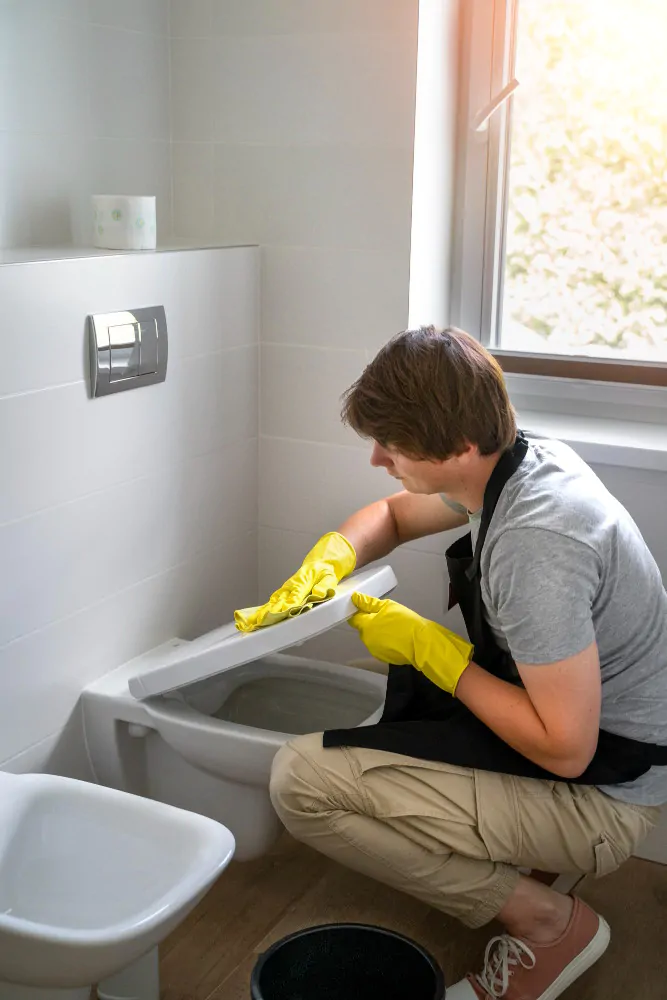
This is the biggest deep clean signal. When our team walks into a home for the first time, we can tell whether previous cleans were surface-only or actual deep cleans just by looking behind the toilet.
What accumulates behind the toilet:
- Dust bunnies (behind toilets is one of the worst dust magnets in any home)
- Cobwebs
- Hair
- Urine splatter on the wall and baseboard
- Cleaning product residue
How to clean it properly:
- Get down on your knees with a flashlight if you have to. Actually look at what’s back there.
- Use a long-handled duster to sweep out dust and cobwebs first
- Spray disinfectant on a microfiber cloth (not directly — you don’t want overspray on your walls)
- Wipe the back of the toilet tank
- Wipe the wall behind the toilet
- Wipe the baseboards
- Wipe the water shut-off valve and pipe leading into the toilet
If you have small kids or male household members, don’t skip the wall behind the toilet. That’s where splatter accumulates.
Zone 8: Floor at the Base
Finally — the floor around the toilet.
The seal between the toilet base and the floor is where hair, dust, and urine build up in a dark line most people never notice until they get down to eye level with it.
Method:
- Spray floor cleaner or disinfectant on a microfiber cloth
- Wipe all around the base of the toilet
- Use your toothbrush along the caulk line where the toilet meets the floor
- Mop the surrounding tile or vinyl
If the caulk line around your toilet base is yellow or discolored — it may need to be replaced. That’s a different project, but a fresh white caulk line makes any bathroom look dramatically cleaner.
Now Come Back to Zone 1: Finish the Bowl
By now the toilet bowl cleaner has been sitting 15–20 minutes. It’s ready.
Step 1: With the toilet brush, scrub under the rim in a full circle. Press firmly.
Step 2: Scrub the sides of the bowl in overlapping strokes, top to bottom.
Step 3: Scrub the bottom of the bowl and the drain hole area.
Step 4: Flush. Continue scrubbing as the water refills — the fresh water helps rinse the cleaner off the surfaces.
Step 5: Once refilled, do one final scrub of any spots that still look off.
Step 6: Rinse your toilet brush in the fresh bowl water and shake dry. Place it back in its holder — then wipe the holder with disinfectant too. A dirty brush holder recontaminates the brush.
How Often Should You Deep Clean a Toilet?
| Household Type | Weekly Regular | Deep Clean |
|---|---|---|
| 1–2 adults, no kids | Once a week | Every 3 weeks |
| Household with kids | Twice a week | Every 2 weeks |
| Household with pets | Twice a week | Every 2 weeks |
| Hard water area (Oakland County) | Once a week | Every 2 weeks + monthly tank clean |
| Guest bathroom (rarely used) | Every 2 weeks | Monthly |
| Vacation rental / Airbnb | Every turnover | Every 2 weeks minimum |
Waterford-specific note: Because Oakland County has notably hard water, we recommend our clients here run a vinegar tank clean every 4–6 weeks. Otherwise mineral buildup causes flush issues and permanent staining over time.
Common Mistakes to Avoid
Not letting cleaner sit long enough. This is #1 by a mile. Contact time is what makes the product work.
Using the same cloth for the toilet and the sink. Bacteria transfer. Always dedicated cloths.
Mixing bleach with vinegar or other cleaners. Creates toxic fumes. Never combine.
Cleaning the outside first, then the inside. The bowl brush splashes water everywhere — always finish the inside last, or you’ll re-contaminate cleaned surfaces.
Using pumice on a stained bowl carelessly. Pumice can scratch porcelain if used dry or with too much pressure. Only use it wet, gently, and on genuine mineral deposits — not general stains. See our stained toilet guide for the right approach here.
Ignoring the tank. As covered above — a dirty tank makes clean bowl impossible.
Skipping the flush handle. Highest-touch surface, most neglected. Every time.
When to Call in a Pro
Deep cleaning a toilet is doable at home if you have the time and the right tools. But if any of these apply, professional help pays for itself:
- You haven’t deep cleaned in 3+ months
- You’re moving in or out of a home
- You have persistent hard water buildup
- You have multiple bathrooms and no time
- You’re preparing for guests or a home sale
Our deep cleaning service covers every zone described in this guide — plus the rest of the bathroom, kitchen, and living areas. We serve all of Oakland County from our Waterford base: Pontiac, West Bloomfield, Troy, Royal Oak, Birmingham, Novi, White Lake, and Commerce Township.
If you also want a full walkthrough of the entire bathroom deep clean, check our detailed guide on how to deep clean a bathroom — it covers the shower, sink, floor, and everything else.
FAQs: Deep Cleaning a Toilet
GoShineUp Cleaning LLC — Serving Waterford Township, Pontiac, White Lake, West Bloomfield, Troy, Royal Oak, Birmingham, Novi, and all of Oakland County, MI. Licensed • Insured • Family-Owned