Hi there! This is a friendly long-form guide from me, Tetiana, owner of GoShineUp Cleaning. Many homeowners find this guide while looking for reliable cleaning services in Waterford, so I wanted to share the same real methods we use every day. If there’s one thing I’ve learned after cleaning homes all around West Bloomfield, Royal Oak, Novi, and Bloomfield Hills, it’s that even the tidiest families battle toilet stains from time to time. Mineral-heavy Michigan water has a mind of its own, and toilet bowls love to show it off. Some days I tell Mykola, “Each toilet we clean has its own personality,” because no two stains ever behave the same way.
But here’s the part I love sharing with my clients — with the right approach, even the most stubborn toilet stains can be lifted safely and effectively. You don’t need dangerous chemical mixes, and you definitely don’t need trendy “hacks” you’ll later regret. What you do need is a little understanding of what kind of stain you’re dealing with, plus the right cleaner for the job.
I wrote this guide exactly the way I’d explain it during a walkthrough in someone’s home. Take your time, follow the steps, and let the products work for you.
What Problem This Guide Solves
If you’re here, your toilet probably has one of the following problems:
- A yellow ring that keeps coming back
- Brown or orange staining from hard water
- Dark streaks or patches that don’t scrub off easily
- Rough, gritty scales around the waterline
- Mineral buildup that keeps returning no matter what you try
This guide walks you through identifying the stain and choosing the safest, most effective cleaning method. Everything here is something we truly use at GoShineUp Cleaning in clients’ homes across southeast Michigan.
Identify Your Toilet Stain First
Before reaching for a cleaner, take a close look — and yes, texture matters as much as color.
Common Types of Stains
- Light yellow or tan rings. Usually mild mineral buildup or simple everyday residue.
- Brown rings that don’t budge easily. Hard-water deposits that have been sitting for a while.
- Dark spots or streaks. Concentrated minerals or old organic matter.
- Gritty, crusty, sandy-feeling buildup. Thick scale — very common in homes in Farmington Hills and Commerce Twp.
If it feels smooth, you’re dealing with discoloration. If it feels rough, that’s mineral scale — it needs a stronger approach.
Gentle Everyday Cleaning Methods
Before we get into stronger techniques, here’s something I often tell homeowners who call us for Waterford cleaning services: start by choosing the method that matches the stain, not the one that feels easiest. Perfect for maintenance or mild stains. These are safe, simple, and great for weekly upkeep.
Many families love this method because it refreshes the toilet without harsh chemicals.
What it does: Creates a gentle fizz that loosens light mineral buildup.
Best for:
- Mild yellow staining
- Routine cleanings
How to use:
- Sprinkle ½ cup baking soda around the bowl.
- Slowly pour 1 cup white vinegar around the rim.
- Let fizz for 10–15 minutes.
- Scrub and flush.
TIP: This is not a heavy-duty solution. If the stain barely lightens, upgrade your method instead of repeating this over and over.
This is one of my quiet heroes. It works without harsh fumes and is perfect for stubborn rings.
What it does: Breaks down deeper mineral deposits with mild abrasion.
Best for:
- Brown rings
- Sandy-feeling buildup
How to use:
- Lower the water level with a cup.
- Mix borax with just enough water to form a paste.
- Spread it on the stain.
- Rest 1–2 hours.
- Scrub and flush.
TIP: Keep powder away from pets and avoid breathing dust.
Stronger Yet Safe DIY Approaches
These are my go-tos when stains need more muscle — without dangerous chemicals.
Citric Acid Powder
If you’ve never used citric acid, it feels like magic. It dissolves mineral deposits fast.
What it does: Breaks down calcium, lime, and hard-water scale faster than vinegar.
Best for:
- Rough texture
- Thick brown rings
How to use:
- Lower water level.
- Sprinkle 2–3 tbsp citric acid on damp surfaces.
- Wait 30–60 minutes.
- Scrub and flush.
TIP: Avoid using on special decorative toilet finishes.
Wet Pumice Stone: The Deep-Clean Hero
This is what Mykola reaches for when nothing else works. It’s safe on glazed ceramic only when completely wet.
What it does: Physically removes thick mineral deposits.
Best for:
- Extremely thick rings
- Heavy waterline buildup
- Scale that chemicals can’t dissolve
How to use:
- Soak pumice stone in warm water.
- Keep the stain wet.
- Gently rub in small circles.
- Rinse often and check progress.
TIP: Never use dry — that’s when scratches appear.
Store-Bought Cleaners with Truly Trust
All available at Home Depot, Lowe’s, Walmart, Target, Amazon. We use these regularly in homes around Novi, Wixom, and Troy.
Lysol Power Toilet Bowl Cleaner (Blue Bottle)
A reliable everyday cleaner. It clings well and rinses clean.
Good for:
- Yellow stains
- Sanitizing
- Light-to-medium mineral buildup
Kaboom Bowl Blaster
When stains are stubborn, Kaboom is a workhorse. Use in a ventilated space — it’s strong.
Good for:
- Dark rings
- Long-standing deposits
CLR: Calcium, Lime & Rust Remover
One of the strongest mineral removers I comfortably use. Avoid letting it touch metal toilet hinges or stone floors.
Good for:
- Heavy calcium/lime
- Rust tinting
- Thick hard-water scale
Pumice Cleaning Wand
Easier to grip than a raw pumice stone. Great tool for beginners.
Good for:
- Thick rings
- Waterline roughness
How to Choose the Right Method
If the stain is…
- Light + smooth → baking soda + vinegar
- Yellow but stubborn → borax paste
- Brown + gritty → citric acid or CLR
- Thick + crusty → wet pumice stone
- You want fast results → Kaboom or CLR
What is the one of the biggest mistakes I see? People keep trying mild cleaners on stains that need something stronger. Once mineral deposits harden, you save time by upgrading your method.
Mistakes to Avoid
- Using a dry pumice stone
- Mixing acids and alkalis (they neutralize each other)
- Letting strong cleaners splash onto stone floors
- Scrubbing too hard with wire or harsh brushes
- Repeating gentle methods endlessly on tough stains
- Using unsafe “hacks” like soda drinks or chemical cocktails
Your toilet should be clean — not scratched or chemically damaged.
Extra Tips From GoShineUp Cleaning
- Let cleaners sit — dwell time does most of the work.
- Lowering the water level gives cleaners direct access to stains.
- For recurring rings, clean weekly and flush more frequently.
- If your home in Milford or Waterford has especially hard water, keep citric acid on hand.
- Regular brushing keeps stains from hardening into scale.
And remember: even if a stain looks intimidating, it usually comes off with the right combination of cleaner + patience.
For a complete zone-by-zone deep clean — bowl, tank, hinges, behind — check our full guide on how to deep clean a toilet.
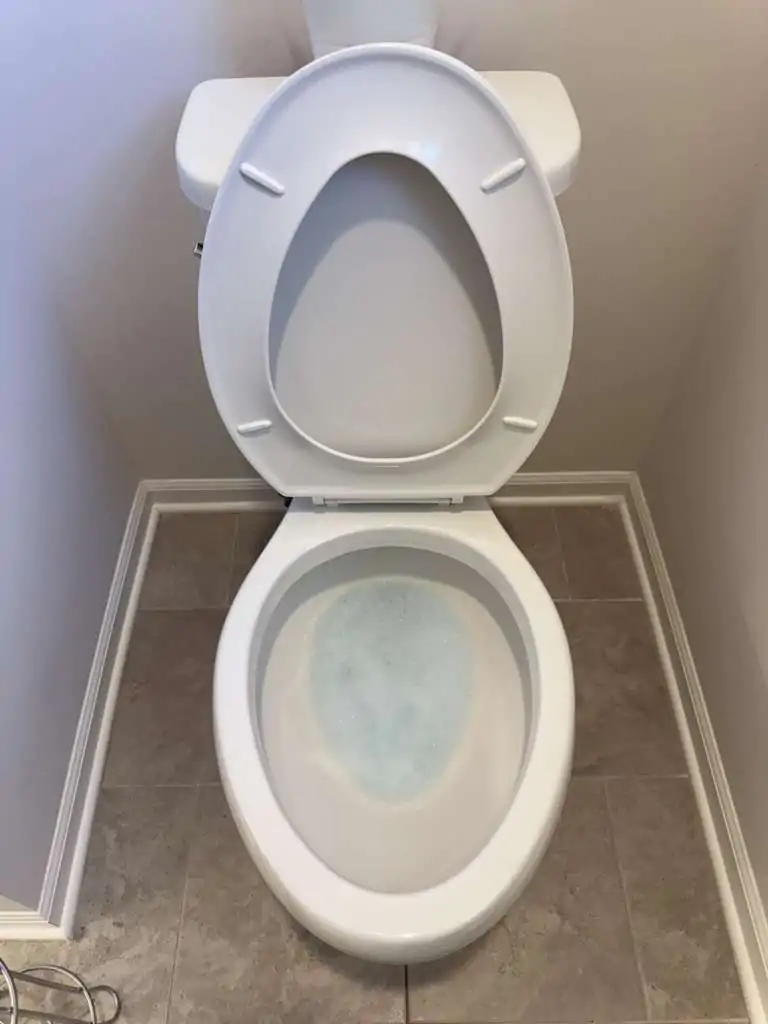
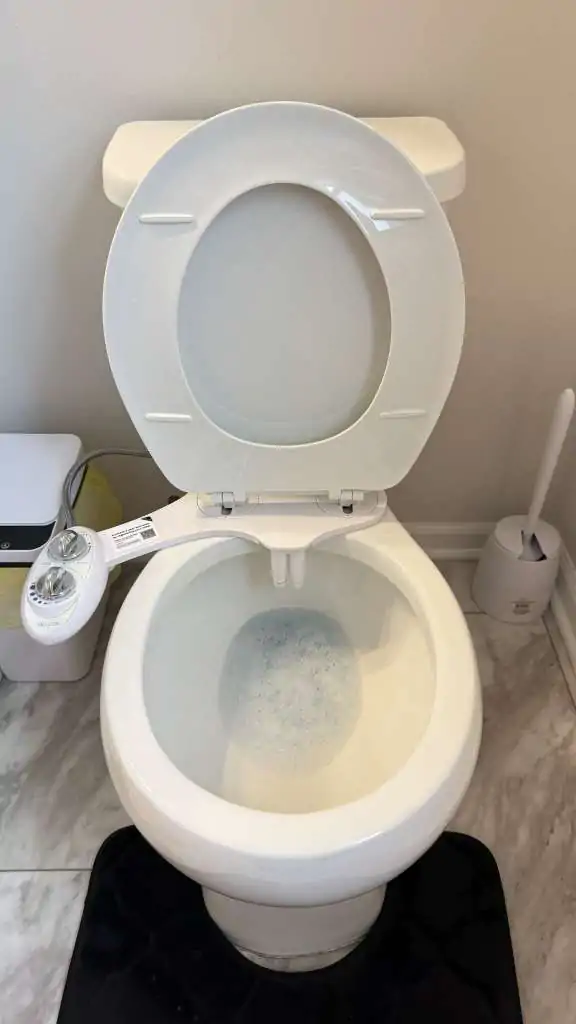
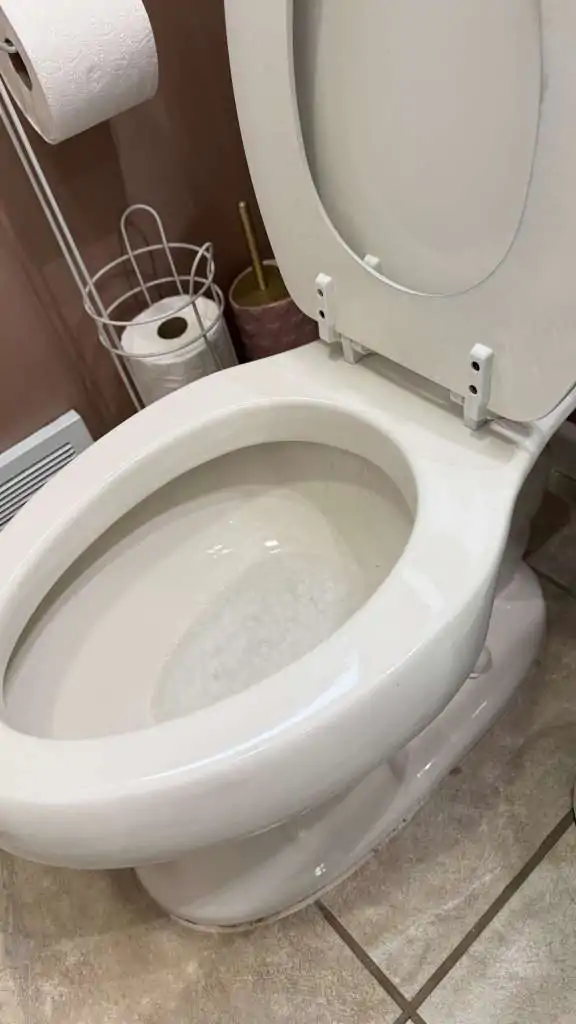
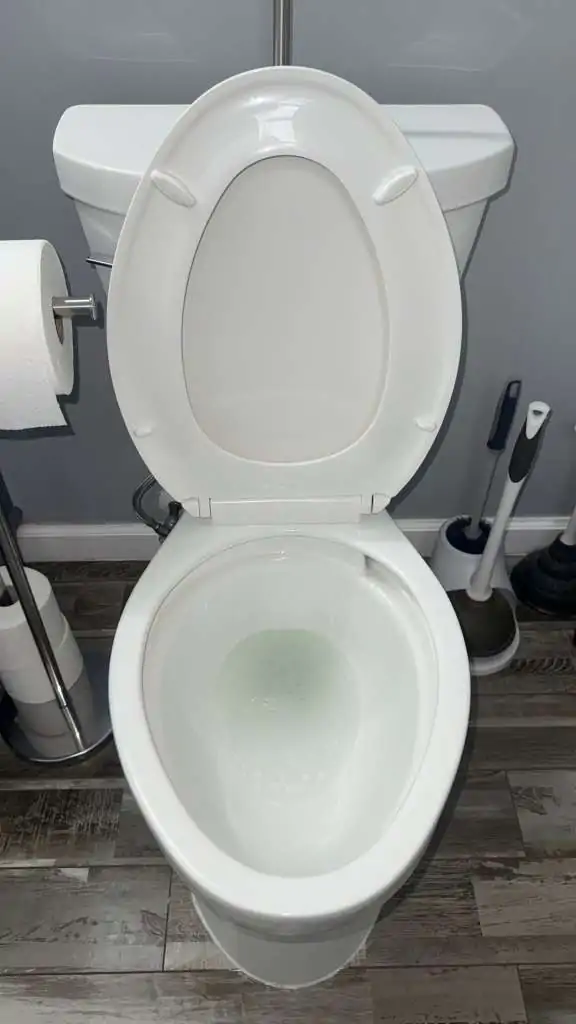
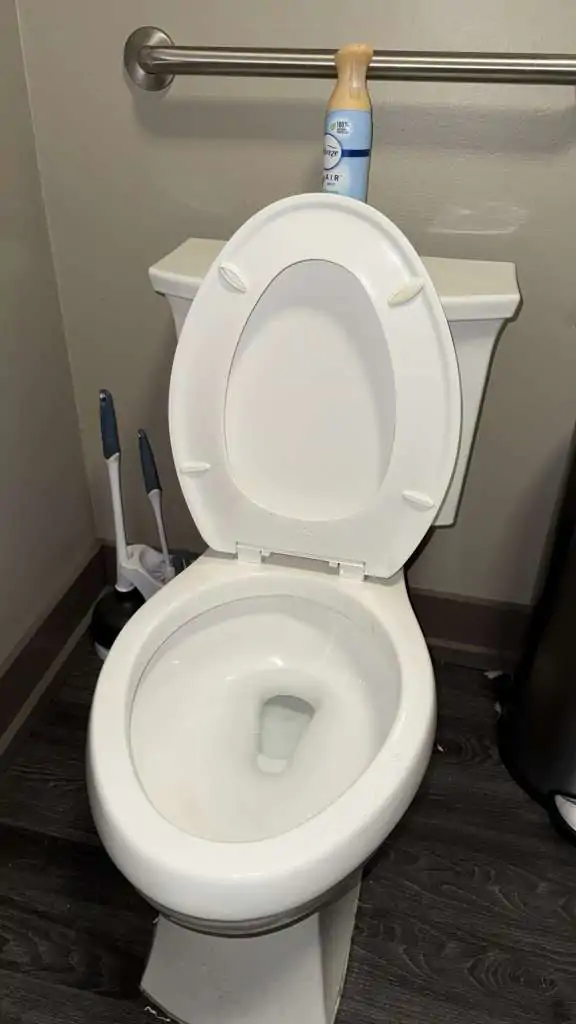
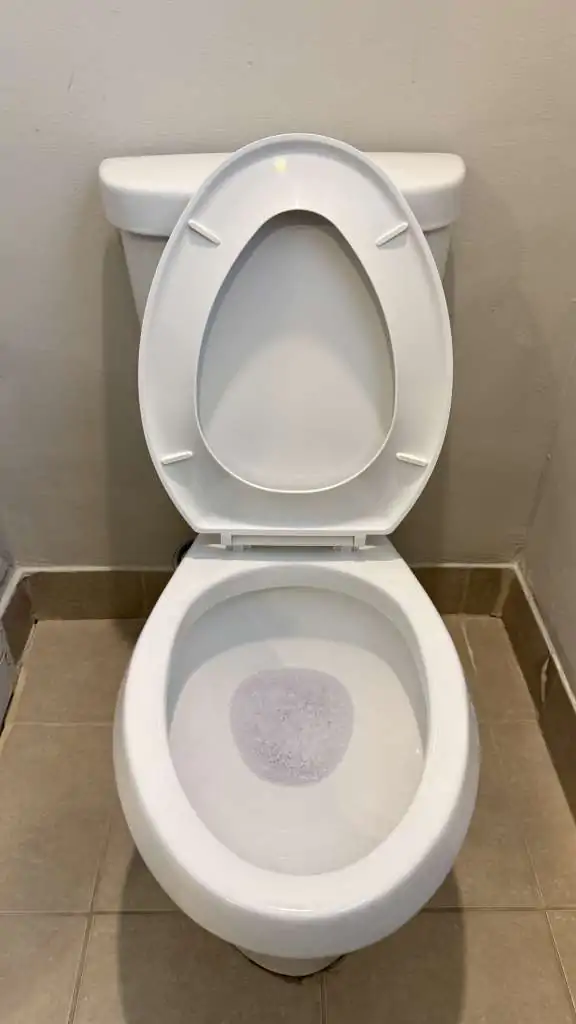
Clean Toilets After Professional GoShineUp Cleaning
Conclusion
Cleaning a stained toilet doesn’t need to feel overwhelming. Once you know what type of stain you’re dealing with, choosing the right method becomes simple — and the results come quickly. At GoShineUp Cleaning, we deal with these stains every day, and I promise you: with patience and the right cleaner, every toilet can shine again.
And if you ever want professional help, Mykola and I are always happy to take that chore off your list.
Warmly, Tetiana & the GoShineUp Cleaning Team